Leading the Audio Direction for Lambyrinth: A Deep Dive into Horror Sound Design
Introduction
In the second half of my VFS journey, I had the incredible opportunity to lead the audio direction for Lambyrinth, a game collaboration project that pushed my creative and technical skills to new limits. Lambyrinth is a short horror puzzle experience set in a twisting, maze-like forest where the player, a lonely shepherd, must rescue her lost sheep before the Midnight Milch finds them. As the audio lead, I was responsible for keeping the entire soundscape under one vision, from initial concept to technical implementation.
Key Features
The Immersive VO System
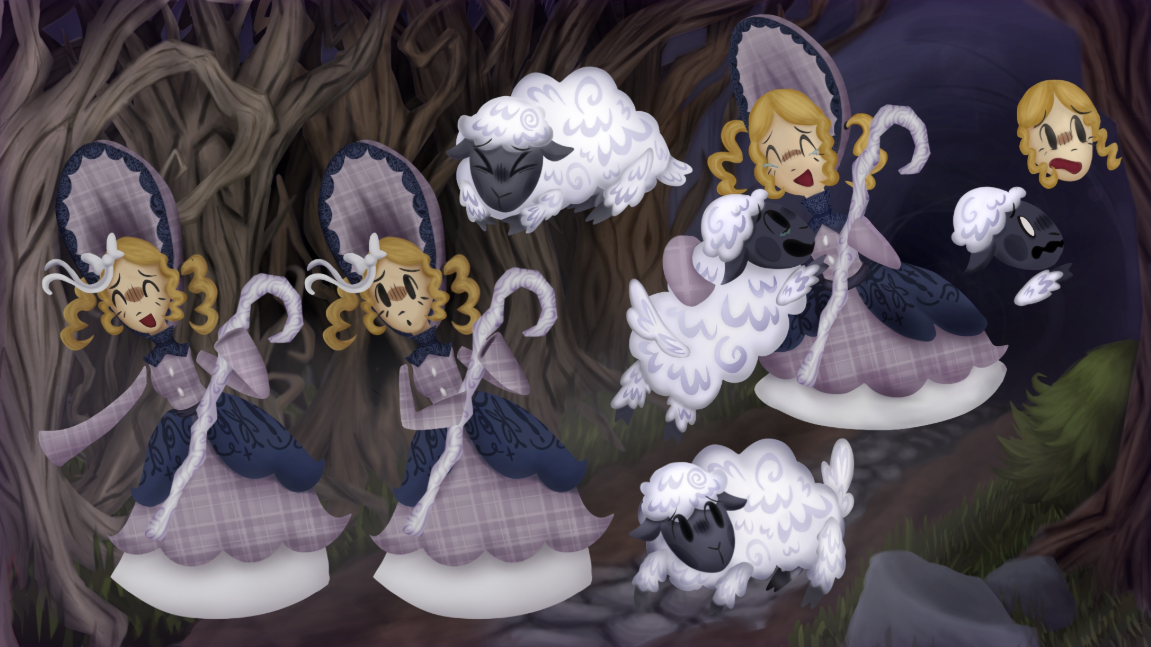
One of the key features in the game is the main character, Bo, which is a cheerful shephard caught in a terrible nightmare. The voice actress Christy Ho did a fantastic job performing.
I handled all technical audio implementation for the project, primarily using FMOD to integrate the soundscape with the game engine. This allowed for the creation of dynamic, responsive audio systems that were crucial to the horror experience. Two key features stand out from this project: the responsive VO system and the monster's voice mimicry.
To enhance the feeling of the shepherd's isolation and desperation, I designed a responsive voice-over (VO) system. This system would trigger different lines of dialogue based on in-game events and player status. For example:
Proximity to Sheep: As the player gets closer to a lost sheep, the shepherd might whisper words of encouragement.
Monster's Presence: When the monster is near, the shepherd's breathing becomes more frantic, and she might utter fearful phrases.
Player Inactivity: If the player stays still for too long, the shepherd might voice her anxieties about the encroaching darkness.
This system was built in FMOD using parameters that tracked player location, proximity to key objects, and the monster's state. It made the character feel more alive and connected the player more deeply to her plight.
The Mimic Monster: Crafting a Terrifying Moment
The most significant feature I implemented was a truly terrifying audio moment where the monster mimics the player's own voice. The idea was to use the player's sense of self against them, creating a deeply unsettling experience. When the player uses their voice to call out for the sheep, the monster has a chance to capture that sound and play it back, twisted and distorted, from a different location in the maze. This was designed to make the player question what was real and whether their own actions were leading the monster right to them.
Technically, this involved setting up a system in FMOD that could capture a snippet of the player's microphone input, process it with distortion and reverb effects, and then trigger it as a 3D sound event from the monster's location. The psychological impact was immense and became one of the most talked-about moments in the game.
Conclusion
This project was a phenomenal learning experience. Leading the audio direction taught me how to maintain a cohesive vision while managing a wide range of assets. On the technical side, I gained a much deeper understanding of FMOD, particularly in creating complex, parameter-driven events. Most importantly, I learned how to design sound that is not just atmospheric but also impactful, shaping the player's emotional journey and creating truly memorable, scary moments.
Lambyrinth was more than just a student project; it was a comprehensive exercise in horror sound design and technical audio implementation. The experience of building its soundscape from the ground up was incredibly rewarding, and the lessons I learned have profoundly shaped my approach to game audio. I'm proud of the immersive, terrifying world we created and look forward to applying these skills to future projects.